
Androgens
Androgens are steroid hormones that influence the development of the reproductive system, especially in males. The majority of androgen production occurs in the reproductive organs. However some also occurs in the adrenal cortex mainly in the Zona Reticularis (Remember – this is the innermost layer at the cotex-medullary junction). Some synthesis also occurs as a by-product of cortisol production in the neighbouring Zona Fasiculata. The production of androgens occurs via Progesterone.
See an illustration of the synthesis of the andgrogens
Androgens synthesised and secreted by the adrenal cortex include Dehydroepiandrosterone (DHEA), conjugated DHEA sulfate, and androstenedione.
DHEA alone is a weak hormone, and is converted into the more potent androgen testosterone. This source is of little importance in males who also produce testosterone in the testes. However for women, the adrenal glands produce up to 50% of the required androgens. In both males and females, androgens (regardless of their site of synthesis) control hair growth in puberty, and sustain libido throughout adult life. They are also important for sustaining bone mass and growth in the adult.
Androgens can be further converted into oestrogens, in particular oestrodiol. In women of reproductive age, the ovaries are the primary source of oestrogens. However in post menopausal women, oestrogen produced from this adrenal androgen is the only remaining source.
Androgens and prostate cancer
In males, androgens are responsible for controlling the growth of the prostate gland from birth through till adulthood. Sometimes, the cells will continue to divide in an unregulated fashion once full secondary sexual characteristics have developed. Anti-androgens are commonly used to block the body’s production of androgens. It has encouraging results in restricting further growth and division of the cancer cells. Unfortunately side effects are common and these include: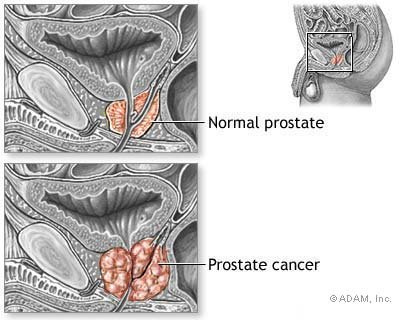
· increased cholesterol (less is utilised in androgen
synthesis)
· osteoporosis (androgens have a role in bone mass
maintenance)
· loss of libido (androgens are responsible for
controlling the sex drive)
· impotence
Image courtesy of https://www.flickr.com/photos/18860914@N06/2866093463/ under a Creative Commons Licence